
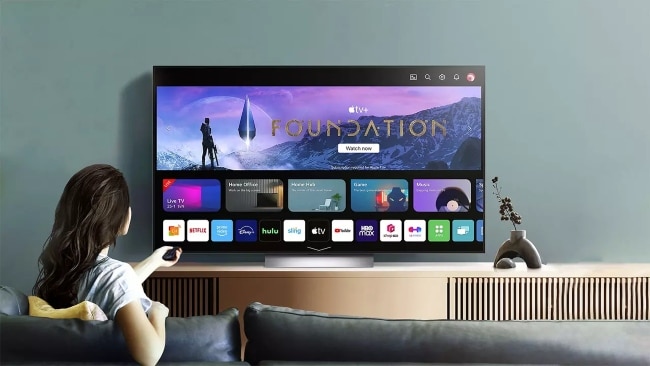
Why does the same CTV campaign convert at 8.7% in Mexico and 4.2% in Miami, and why are you still measuring it wrong.
Same creative. Same targeting. Same budget. Mexico converts 2x better than Miami. Most brands still do not know why.
In October 2025, a multinational beverage company executed one of the most revealing natural experiments in the history of Latin American retail media. They did not plan it as an experiment: they planned it as a media purchase.
Three markets. Identical campaigns. An anomaly that no one on the media team could explain.
The anomaly was not a mistake in the attribution model or a targeting failure. It was culture. A specific, measurable, and reproducible cultural behavior that North American playbooks have no framework to capture.
They called it a coincidence. It was not. It is a systematic advantage, and retailers who understand it first will dominate for years.
The experiment
October 2025. A large multinational beverage company designed what any rigorous media buyer would call a controlled test:
- Same creative; no adaptations by market.
- Same targeting parameters, adults aged 25 to 40.
- Same budget: USD 500K per market
- Same measurement window: visits to the retailer's site within 7 days post-exposure
- Three parallel markets: Miami, São Paulo, Monterrey
The results shattered every assumption they had about market comparability:
- Miami conversion rate, 4.2%
- São Paulo conversion rate, 1.8%
- Monterrey conversion rate, 8.7%
Mexico not only outperformed the other markets: it surpassed them by more than 2x, in a market with comparable smartphone penetration, income levels, and eCommerce infrastructure.
The first instinct was to question the data. The second was to accept it. The third, where most brands stop, was to assume it was a temporary anomaly driven by local factors.
It was not a coincidence. It was physics. And physics has a name.
The family room effect
To understand why Mexico converts differently in CTV, one must understand how Mexicans watch television.
In the United States, CTV consumption is fundamentally a solitary act, even when it happens in the same room. Nielsen Q3 2025 data shows that 68% of CTV sessions in the U.S. occur in what researchers call "second screen mode": the television is on, but the viewer's main attention is divided between the screen and a smartphone. The television becomes ambient content. Perceived but not absorbed.
Mexico is structurally different. 71% of CTV sessions in Mexico occur in what the same Nielsen data calls "family room mode": multiple people, one screen, collective attention.
68% U.S.: Second Screen Mode · TV + smartphone, divided attention
71% Mexico: Family Room Mode · Multiple viewers, one screen, full attention
The consequences of this difference are profound. When a family watches television in Mexico, an ad enters a social context. It is seen, commented on, discussed. The person watching the ad is rarely the person making the purchase. And the purchase almost never occurs immediately.
This is not a consumption pattern that any individual-level attribution model was designed to capture.
Why attention multiplies
There is a fundamental difference between listening and hearing. Most media models treat them as equivalents. They are not.
When 68% of your audience is scrolling through Instagram while an ad is playing, you're getting ear time. When 71% of your audience is watching with their family, commenting on the product, asking "where did you see that?", you're getting listening time.
The difference in ad recall is not subtle. Mexico generates a recall 3.1x greater than the U.S. for the same CTV creative, according to the same Nielsen analysis. It’s not a difference in creative quality. The creative is identical. It’s a difference in attention. And in Mexico, attention is shared attention.
3.1x greater ad recall. Same creative. Different room dynamics. The room is the product.
The measurement problem
This is where most retailers misunderstand what the Family Room Effect means for their business.
An 8.7% conversion rate sounds like a performance win. And it is. But it’s also a warning about measurement.
In the beverage brand experiment, "conversion" was defined as: person exposed to the ad → visit to the retailer's site within 7 days. This definition contains a hidden and critical assumption: that the person who sees the ad is the person who makes the purchase.
In the U.S., with solitary consumption on a second screen, this assumption is approximately correct. In Mexico, it is systematically incorrect.
The family purchase cascade
This is what really happens with the Family Room Effect:
- Parent (40 years old) sees supermarket delivery CTV ad during family movie night
- Teenager (17 years old) comments: "We should try that, we always run out of things on Sundays"
- Spouse (38 years old) opens their phone and searches for the product, different device, different session
- Spouse adds to cart but does not complete the purchase
- Three days later, the teenager reminds the parent through the family WhatsApp group
- The parent completes the purchase on a device that was never exposed to the ad
Under standard individual attribution, this sale goes uncredited (if the attribution window has expired) or is credited to an organic search (if the final click came from a search engine). The CTV campaign receives no credit.
The advertiser reviews the data, sees 4% attribution, assumes that CTV doesn’t work in Mexico, and reallocates the budget to performance search.
They just measured the wrong thing and came to the wrong conclusion.
The measurement model did not err with the numbers. It erred with the unit of measurement. The unit is not a person. It’s a household.
The framework: thinking at the household level
The insight of the Family Room Effect requires a different measurement architecture. No more technology: more conceptual precision.
Attribute to the household, not the individual
The first principle sounds simple. It’s not easy. Household-level attribution requires linking purchasing behavior across multiple devices, multiple sessions, and multiple time windows, all connected by a common household identity.
The necessary data exists. Loyalty programs capture household identity when members share an account. Credit card data captures household purchasing patterns. First-party retailer data, when properly structured, can link the device that saw the ad with the device that made the purchase, if both are registered under the same loyalty account.
The question isn’t whether the data exists. The question is whether your data infrastructure is organized to use it this way. For most Mexican retailers, the answer today is: not yet.
Extend attribution windows to match social cycles
The Family Room Effect is not a 24-hour phenomenon. The purchase cascade, from exposure to the ad through family conversation, search, cart, and purchase, unfolds over days. Sometimes weeks.
A 7-day attribution window, standard in most CTV campaigns, captures some of this. A 30-day window, uncommon in the industry, captures more. A model calibrated to the actual social cycle of the Mexican household, which requires measuring it, not assuming it, captures the truth.
Effective systems are not measured by the day. They are measured by the pattern. The buying pattern in Mexico follows cycles of family conversation, not individual impulse cycles.
The closing competitive window
This is the structural opportunity that only exists now, in 2026.
As we could see in January 2026 from their public commercial offerings, none of the major CTV platforms operating in Mexico (neither Blim TV: 6.2M monthly active users, nor VIX: 8.4M users, nor Claro Video: 3.1M users) currently offers native integration with retail media data for household-level targeting.
This means no retailer has yet built the attribution infrastructure that captures the Family Room Effect at scale. The advantage is unclaimed.
The window to claim it is 12 to 18 months. After that, one of three things happens: a major platform builds it alone, a well-funded competitor builds it first, or the market commoditizes it and the first "mover" advantage disappears.
A fair counterargument
A skeptical CMO reading this would ask:
"If attribution is broken, how do we know the 8.7% is real and not a measurement artifact going the other way?"
It’s the right question. And the honest answer is: we don’t know the exact number. The 8.7% is probably underestimated (because family-based cascade purchases are not captured), not overestimated. But the direction (that Mexico converts significantly better in CTV than comparable markets) is consistent across multiple data sources, not just in one experiment.
Nielsen recall data (3.1x) supports this. The volume of recommendations on WhatsApp (340M product messages per month in Mexico, according to Meta Q3 2025) supports this. Data on family consumption behavior (71% of multiperson sessions) supports this. The individual experiment is not the proof. It is the visible manifestation of a structural reality.
The conservative path has a cost. The cost is that the 12 to 18 month competitive window runs without you.
Connection to the attribution crisis
This matters beyond the CTV strategy. It connects to a crisis that will hit the Mexican retail media in October 2026.
Brands are already auditing attribution inconsistencies among retailers. The case we examined in Week 1 (where four retailers simultaneously claimed credit for sales that collectively exceeded the brand's total revenue by 180%) is not an isolated incident. It is a precursor to the reckoning.
If household-level behavior is systematically uncaptured, then every ROAS reported by any retailer is wrong in the same direction: overestimated for individual purchases, underestimated for social cascade purchases. Brands conducting cross audits are about to discover this. Retailers that have already built household-level measurement will be the ones with defendable numbers when the audits arrive.
Brands come with auditors. The question is whether you want to face them with your current attribution model or with one that truly captures how Mexican families buy.
Three actions for the next 90 Days
- Audit your loyalty program to identify household identity linkage. If the same address has multiple accounts, you have the raw material for household attribution. Most retailers have it. Most have not connected the dots.
- Run a 90-day CTV pilot with a 30-day attribution window instead of 7. Compare the results. The difference will tell you how much of the Family Room Effect you are currently missing.
- Open a conversation with a CTV platform about a data sharing pilot. They also want the integration; they need retail data to prove their own effectiveness. The first retailer to propose it defines the terms.
What doesn't change
The Family Room Effect is not a technological problem. It is a conceptual problem. Before you can build the measurement infrastructure, you must believe that the unit of analysis is wrong.
The U.S. model of digital advertising was built around the individual: one person, one device, one journey, one conversion. This model works where people buy alone, decide alone, buy alone.
Mexico has a different physics. Decisions are social. Journeys encompass households. The room where the ad is played is the start of a conversation, not the trigger for a purchase.
Brands and retailers that internalize this, not as a cultural footnote, but as a fundamental principle of measurement, will not only capture the 8.7%. They will build the infrastructure that makes every future investment in CTV multiply.
The room is not the audience. The room is the algorithm.