

For years, working in CRM meant pursuing a single goal: reaching the customer on time. That the right message, with the right offer, would arrive at the exact moment. That promise of real time became the standard that all companies aspired to, although few actually managed to achieve it.
There is much talk today about the digital transformation that all business areas are experiencing due to technological innovations. Uncertainty looms through curious glances that wonder where we are going and what will happen even to us as professionals in this wave of changes.
Today, I want to talk specifically about the changes in CRM. When I started my career over 10 years ago, the channels were mainly physical: mail, telemarketing, and barely some digital ones like email or SMS were beginning to emerge. Over time, CRM evolved into a much more complex orchestrator, capable of connecting multiple teams, technologies, and touchpoints to build increasingly personalized experiences.
In that process, data became the center of everything: segmentation, measurement, dashboards, models, automation. Everything pointed to the same goal: achieving that immediacy that today defines the prestige of a company.
Because if there is one thing that the evolution of CRM taught us, it is this: if you are not able to react in real time, you fall behind.
I believe that is the reason, personally, why CRM was so relevant to me professionally. As someone who started their career in data science, I felt it was the area capable of uniting data with experience, which I found very noble. Additionally, most projects always come with many insights to reach the conclusion that new launches are needed.
A couple of years ago, alongside a unicorn, I had the opportunity to lead the CRM strategy for over 13 e-commerce companies across Latin America. The handoff to begin operating each of them was extremely important, but it also carried a great responsibility. Taking ownership of more than 13 companies in less than a quarter was going to require a lot of effort, especially considering that they were all at different stages. It was then that the design of standardization and processes became extremely important to bring each of these companies, at different stages, to the most important point of synchronization and understanding of our customers.
From that experience, I structured a CRM maturity model that, in essence, followed a progressive path:
Level 1: Subscription basics The basics: subscription/unsubscription, acquisition, compliance, channel management.
Level 2: Automated campaigns Essential flows such as welcome journeys, abandoned cart, and transactional communications.
Level 3: Personalization and insights Deeper segmentation, category journeys, and early behavior models.
Level 4: Marketing intelligence Machine learning models, multichannel integration, and use of CDPs.
Additionally, a step that became very important was the standardization of technologies. A great experience in Martech was required to provide this possibility, because if not done, the control of many companies could turn this lack of standardization into a snowball that, sooner or later, becomes difficult to operate.
Furthermore, adopting technologies capable of integrating with new platforms became essential for us, as many e-commerce, CRM, or any type of platforms can lose relevance if they are not able to perform drag and drop integrations efficiently. As I mentioned earlier, the most important thing for users becomes real time.
Level 4 was, evidently, the most attractive. In theory, this path led to real time, but in practice, most companies barely reached level 2. None could go beyond Welcome Journey and Abandoned Cart, as there were still many solutions to develop in terms of data and integration.
Data, automation, real time, measurement, and multichannelism seem to be well-known solutions to all of us, but the reality is that few companies have managed to cover all those aspects.
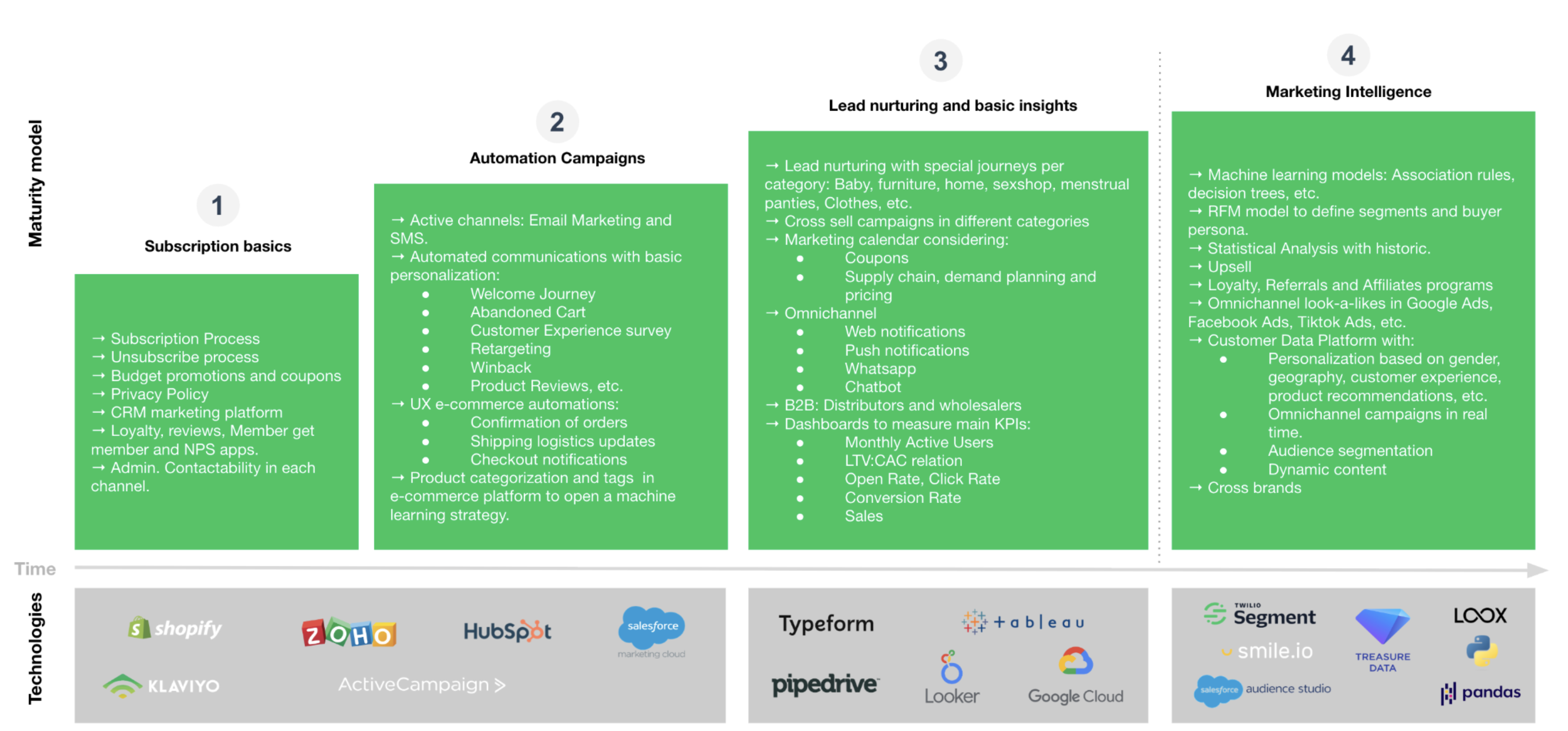 CRM Maturity level model.
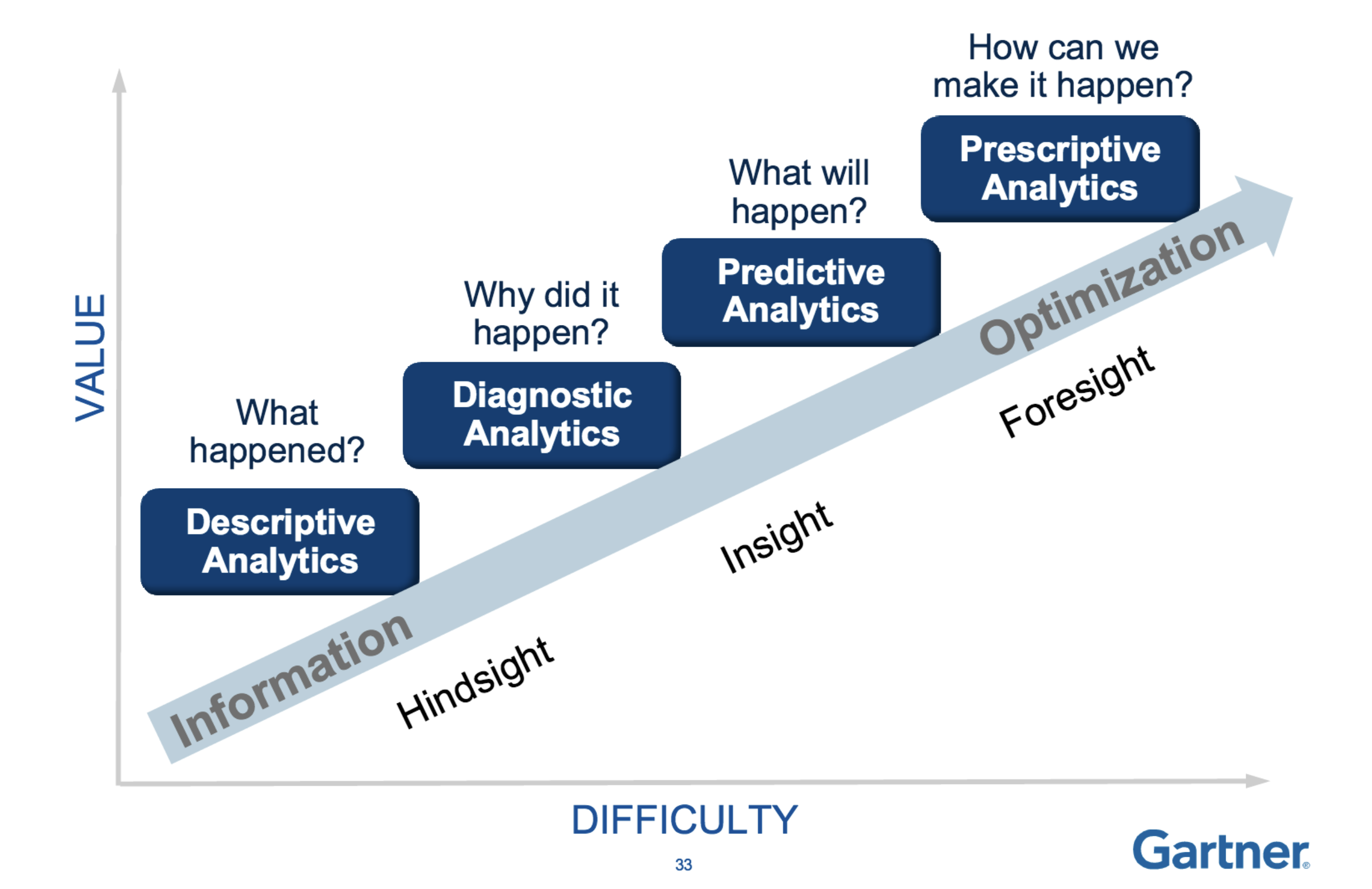 Source: Gartner Data Maturity Model, adapted from Predinfer.
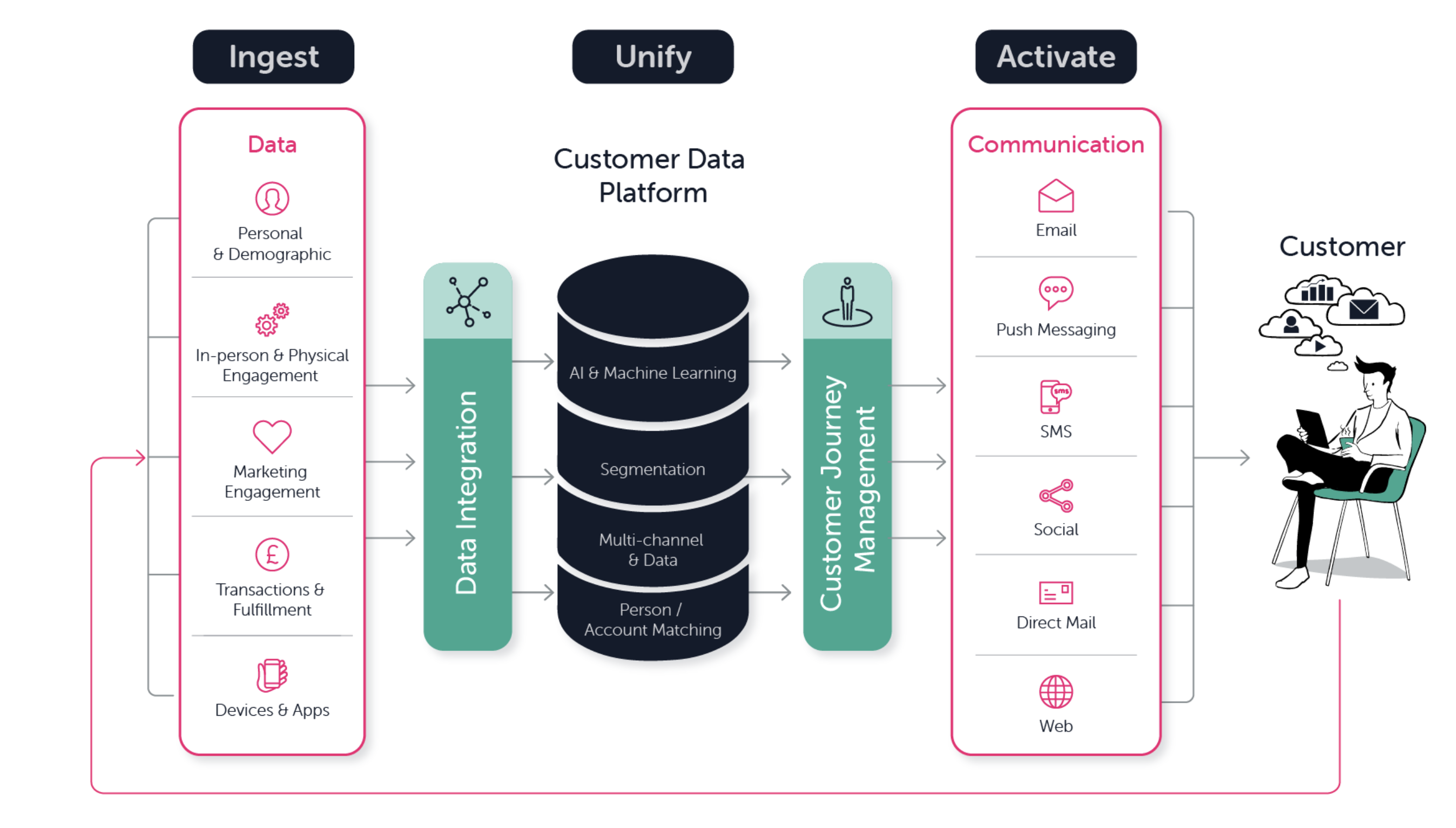 Source: What Makes a Customer Data Platform?, Clevertouch Consulting.
And in 2023, when it seemed like we were finally close to solving it, something appeared that changed the rules of the game: generative artificial intelligence.
Not because it replaced everything that came before, but because it introduced something new: the ability to adapt, generate, and respond in real time without fully relying on that prior maturity.
Just a few years ago, my priority was clear: to have a Customer Data Platform that connected all touchpoints to orchestrate campaigns at the right moment.
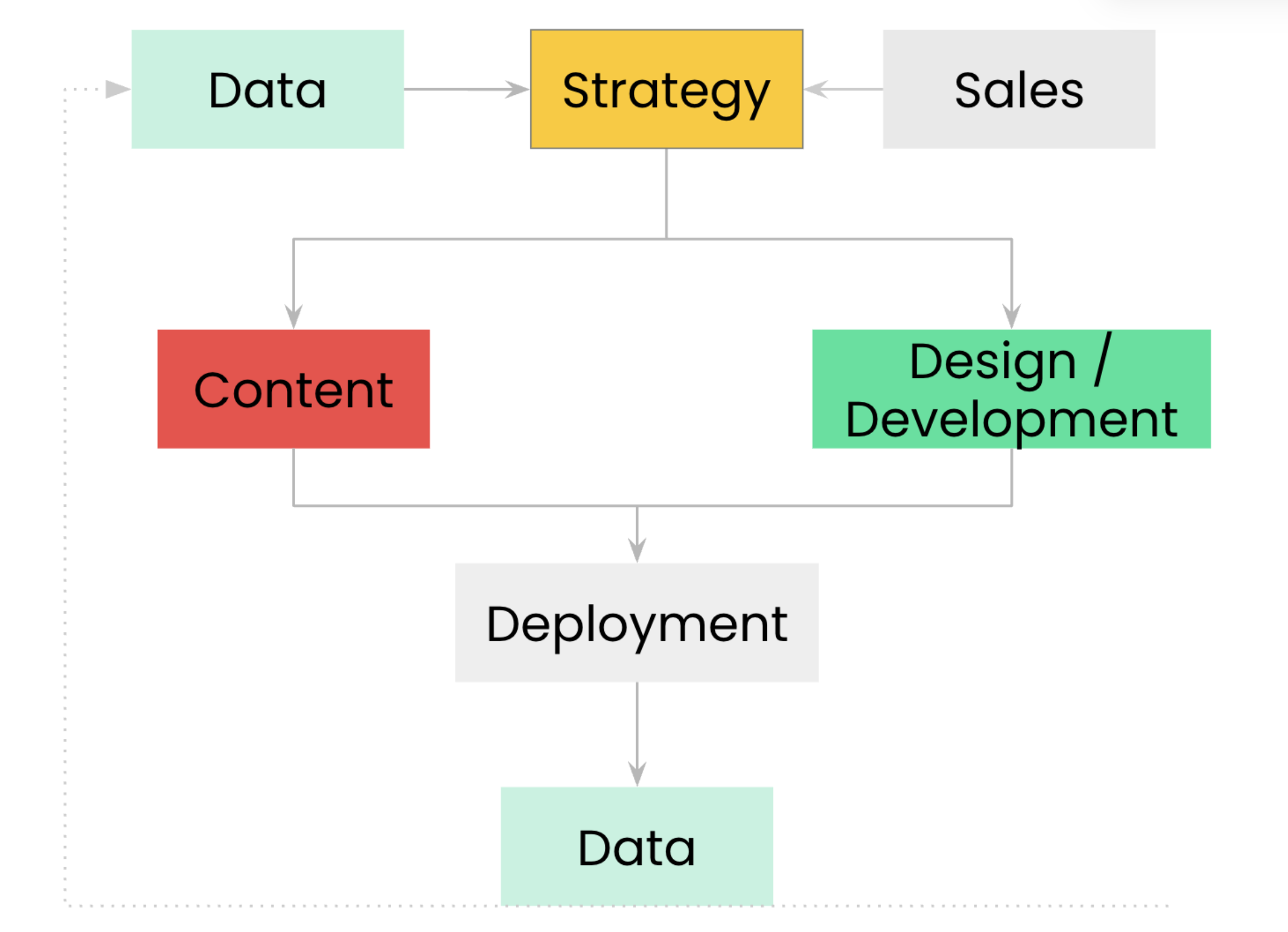
Today, the profile of a CRM specialist is changing, seeking ways to help our teams accelerate that immediacy and achieve quality processes through the generation of agents with Gen AI. This has made this new technological wave even more exciting, as we migrate towards a more technological role and mindset.
CRM has ceased to be just a platform to become a martech role capable of developing these innovations, considering the experience of both users: our clients and our operators, and with that the creation and restructuring of new agents.
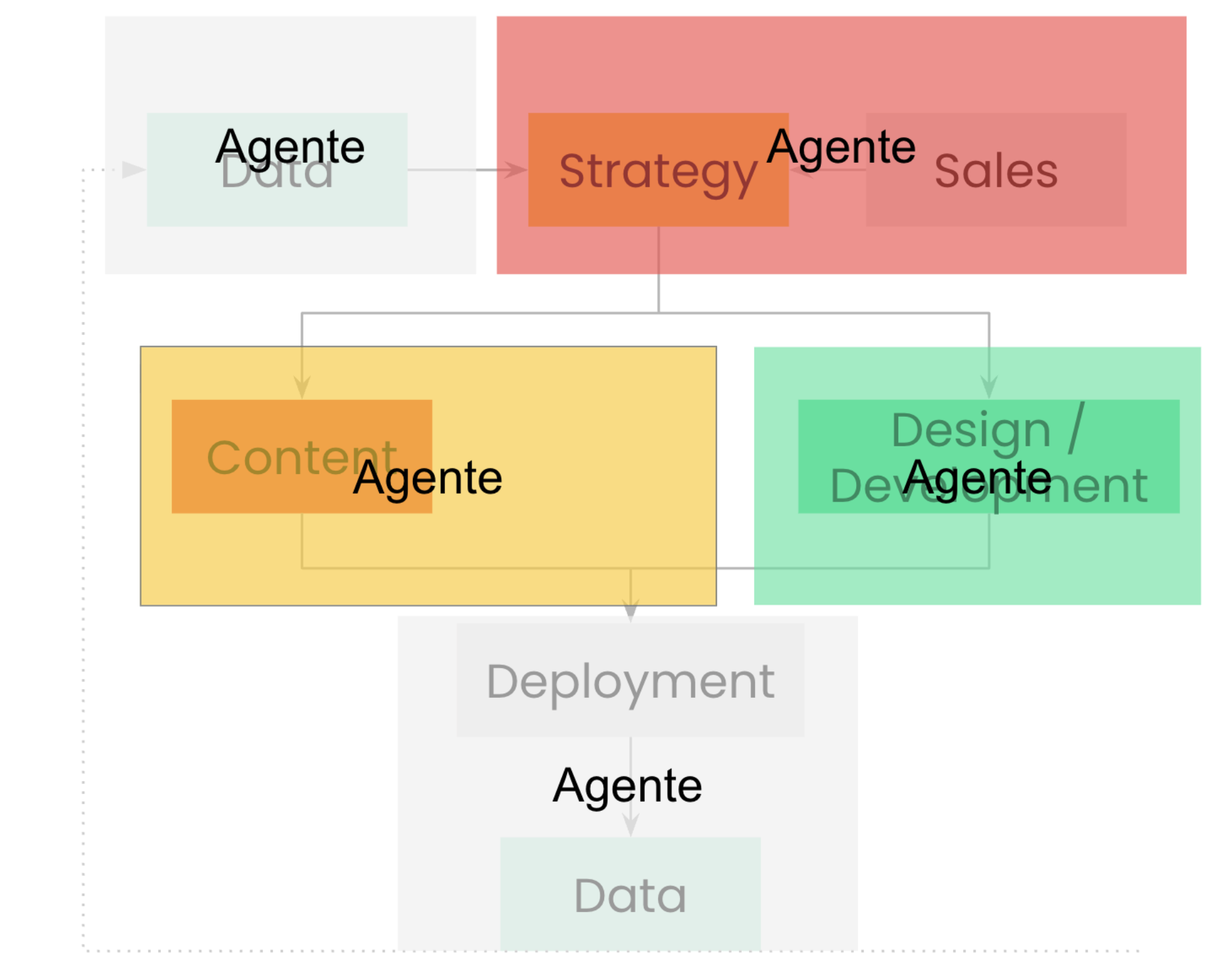
In my day-to-day, working in CRM for D2C and B2B models, this is already tangible.
The design of assets, the generation of copies, experimentation, audience building, globalization of campaigns: all those things that previously involved coordination among multiple areas can now be accelerated through artificial intelligence.
Not because the areas disappear, but because the friction between them changes.
And it is then that I realize something I had not seen coming so clearly: artificial intelligence is not only at the service of the customer, but also at the service of the operator.
This does not eliminate the need for data, nor strategy, nor judgment. The quality of the information remains critical. Decisions still need context. And artificial intelligence, though powerful, still depends on our input.
But it does change something fundamental: the speed at which we can think, test, and execute.
The CRM, then, stops being just an execution platform to become a space where the operator also interacts in real time with technology. A space where agents, co-pilots, and new ways of building experiences begin to appear.
I am not yet clear on how far this change will go. But I do know that, for the first time, the challenge is no longer just to understand the customer, but also to understand how to develop this technology for operators, so that AI works, learns, and responds alongside us.
And maybe there lies the real change of CRM: increasingly closer to real time.