
Strategic Nostalgia as a Positioning Driver
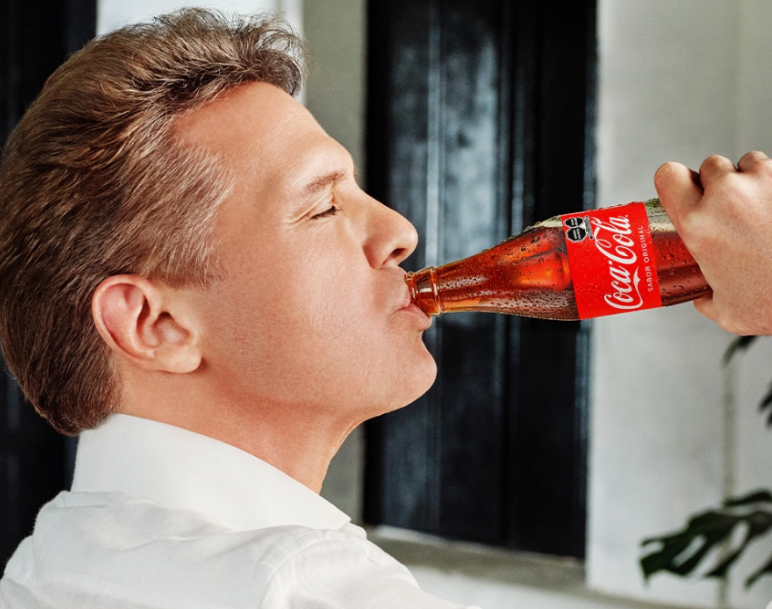
Building a global brand is based on its ability to integrate into the cultural fabric of local markets. Coca-Cola, celebrating one hundred years of operations in Mexico, has opted for a marketing move that appeals directly to collective memory: the return of Luis Miguel as a brand ambassador. This alliance does not represent a novelty, but the reactivation of a bond that began in 1991 with the campaign "Live the Feeling," which marked a milestone in national advertising. By reintegrating the interpreter under the concept "Our formula is always together," the company seeks to consolidate a sense of belonging that transcends the product to position itself as a constant element in the personal history of consumers.
The Economic Impact of a Centennial Ecosystem
Beyond the advertising narrative, the operational deployment of the Mexican Coca-Cola Industry (IMCC) constitutes a pillar for local trade. Currently, more than 1.2 million retail establishments, popularly known as "tienditas" (small convenience stores), distribute their products throughout the national territory. This logistical reach translates into a considerable workforce, with the generation of one hundred thousand direct jobs and one million six hundred thousand indirect jobs. Carmen Méndez, Vice President of Frontline Marketing at The Coca-Cola Company Mexico, states that this anniversary is a recognition of the relationship built with millions of people across various generations, reaffirming that the brand is part of Mexicans' daily encounters.
Recall and Dominance in Global Marketing
From a global marketing perspective, the selection of a figure with Luis Miguel's trajectory allows the organization to leverage a high level of brand recall without needing to explain its value proposition. The artist himself has stated that his thirty-five-year relationship with the company has a deep meaning that connects music and personal memories. In business terms, this type of high-profile campaigns ensures that the brand maintains its dominance in the beverage market by associating consumption with specific emotional moments, such as family meals or celebrations. The strategy demonstrates that, in highly competitive industries, the competitive advantage lies in the ability to be perceived not as a provider, but as a historical companion.
From next+ we believe that the celebration of this centenary exemplifies how multinational corporations must balance global scale with deeply emotional local execution. What we observe is a master class in positioning, where economic legacy and cultural influence merge to shield consumer loyalty in an increasingly fragmented market. For regional executives, the Coca-Cola case underscores that investment in emotional capital and a capillary distribution network is what allows an organization to remain relevant for a century of social and economic changes.