
The Head of Government of Mexico City, Clara Brugada, presented the economic balance of the capital's participation as a host city for the 2026 World Cup: the generated revenue exceeds 45 billion pesos, with expectations of surpassing 50 billion before the tournament concludes on July 19. The figure was reported by the National Chamber of Commerce, Services and Tourism.
The balance was presented after Mexico was eliminated in the round of 16 against England, thus concluding Mexico City's stage as an active host for the national team. In total, the city hosted five matches of the national team during the tournament.
The attendance figures are significant. Mexico City received 3.7 million visitors during the World Cup activities and registered hotel occupancy above 80%. The record for public concentration was registered on July 1, after Mexico's victory over Ecuador, when 1.4 million people took to the streets, the largest citizen mobilization documented in the capital during the tournament. In the match against England, more than 1.35 million people gathered in public spaces of the city.
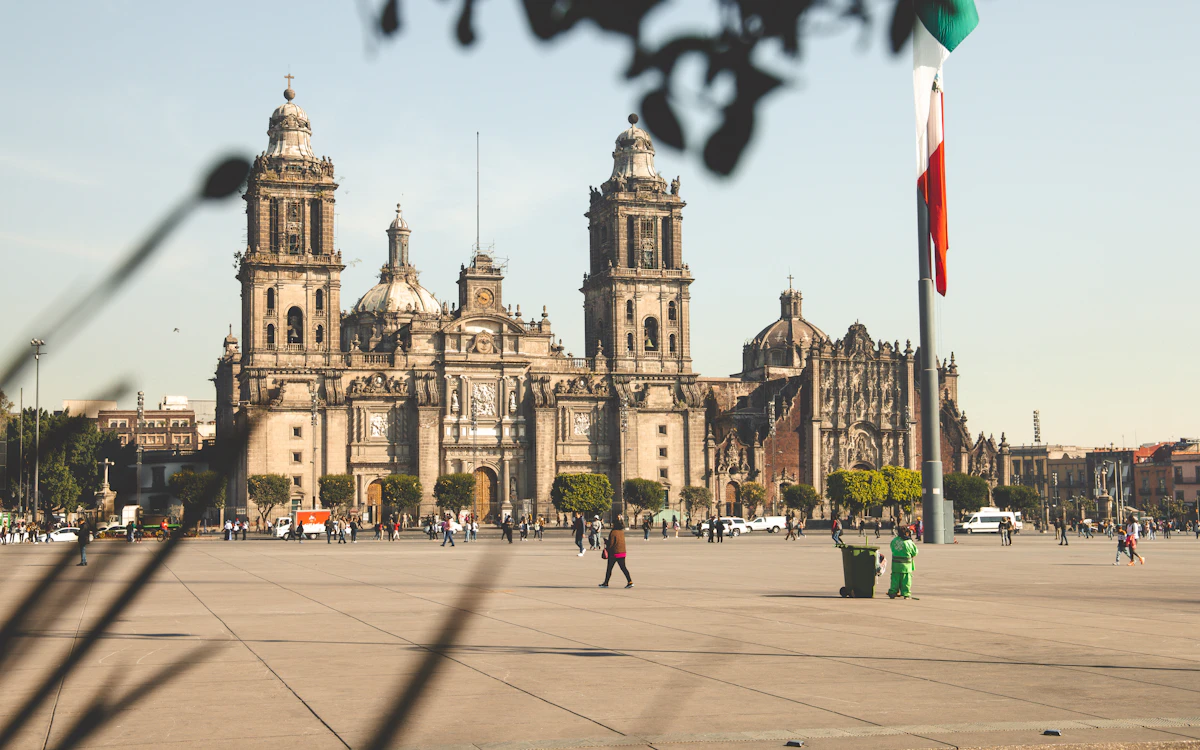
The capital government's strategy was to bet on the decentralization of celebrations. 17 football festivals were installed in the 16 boroughs and screens were placed at key points of Paseo de la Reforma, the Zócalo, the Monument to the Revolution, and the Angel of Independence. Brugada pointed out that this distribution allowed the economic impact to reach different corridors of the city and not just the immediate vicinity of the stadium.
The most benefited sectors were tourism, lodging, commerce, restaurants, bars, transportation, and entertainment. Coparmex estimated that among its members, the spending of national and international visitors reached 18.818 billion pesos, considering lodging, transportation, commerce, and entertainment. The average spending per match was around 1,600 pesos per person. Canaco CDMX calculated in a preliminary evaluation that the revenue for established businesses during the five matches of the Tricolor was 22.678 billion pesos. Coparmex also identified that informal commerce captured nearly an additional 2.1 billion pesos in public spaces such as the Angel of Independence and the Zócalo, resources that are not accounted for within the official revenue.
The capital government's total figure of 45 billion far exceeds prior estimates for the tournament. At the beginning of the World Cup, Canaco's expectation for the capital was 26.280 billion pesos, so the result represents an upward adjustment of more than 70% compared to the original projection.
Concanaco Servytur also updated its national figures upwards: its president Octavio de la Torre estimated that the total economic impact of the World Cup in Mexico could exceed 65 billion pesos by the end of the tournament.
From next+'s perspective, the most relevant data is what these figures reveal about the capacity of a host city to capture economic value beyond the stadium. The decision to decentralize celebrations through festivals in boroughs and screens in multiple corridors distributed the economic impact more broadly than if consumption had been concentrated only in areas near the Mexico City Stadium. For brands and retailers operating in the capital, the balance confirms something that consumption data during the tournament already indicated: the World Cup was the most powerful consumption activator Mexico City has seen in years, with consumers more willing to spend, commercial corridors with historic traffic, and hotel occupancy not seen at that level since before the pandemic.