
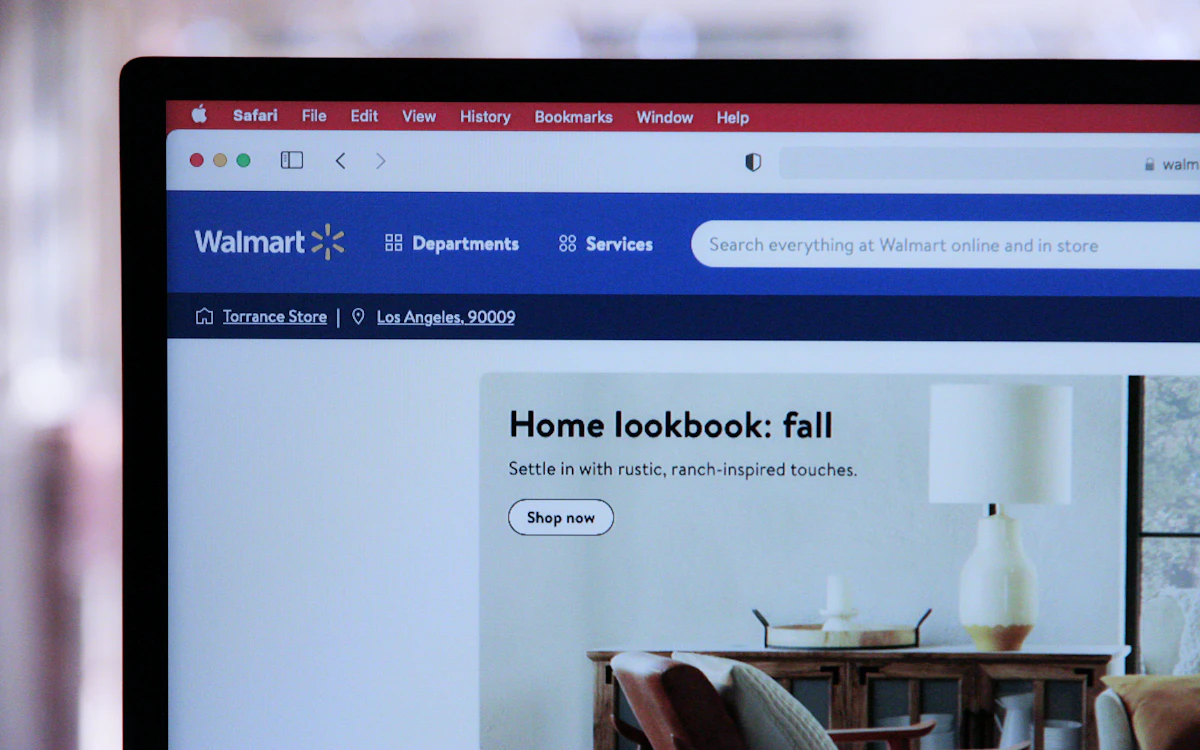
From Cannes, Walmart introduced Sam's Club Connect, the new name for what was previously called Sam's Club Member Access Platform (MAP).
Behind the rebranding is a strategic decision: to integrate Sam's Club Connect into Walmart's global commerce media ecosystem, alongside Walmart Connect and Walmart Connect International, under a unified architecture based on scale, first-party data, and omnichannel capabilities. The stated goal by Seth Dallaire, Chief Growth Officer of Walmart, is to scale the company's advertising business in the coming years by capitalizing on the Sam's Club audience, a membership segment with particularly rich transactional data and a high-frequency relationship with consumers.
The financial context of the announcement leaves no doubt as to why Walmart wants to scale this business. Its advertising operation generated nearly $6.4 billion in 2025, more than three times what it recorded five years prior. And yet, in terms of market share, Walmart Connect represents only 8% of retail media in the United States. Amazon Ads accounts for 79.7%. Together, they control 87.7% of the market.
Global investment in retail media will reach $71.09 billion in the United States in 2026, while Retail Media Networks globally will reach a value of $174.2 billion. These figures explain why the Sam's Club rebranding is not just a brand adjustment but a sign that Walmart wants to accelerate its participation in the fastest-growing business within digital advertising.
The structural advantage that Amazon and Walmart have over any other player in the advertising ecosystem is the same: real transactional data. Not estimated affinities, not inferred browsing behavior. They know what each consumer buys, how often, in what categories, when they switch brands, and how much they spend. This quality of data allows their advertising networks to offer something that traditional programmatic advertising cannot: verifiable attribution based on actual purchases, not clicks or impressions.
The economic differential is also hard to ignore. While traditional retail margins fluctuate between 5% and 10%, retail media operations can generate margins of between 60% and 70%. This makes advertising the most profitable business within modern commerce, more so than the product inventory itself.
Walmart interacts with over 150 million customers every week and operates over 10,000 stores and clubs worldwide. With this scale of audience, data, and physical and digital touchpoints, the company is no longer limited to selling products. It positions itself as a media platform with direct access to actual buyers at the moment closest to the purchase decision.
For the next+ team, the integration of Sam's Club Connect into the Walmart advertising ecosystem confirms what has been progressively happening in the media ecosystem: advertising power is migrating from those who manage audiences to those who possess verified purchase data. Large media agencies, digital publishers, and models based on traditional programmatic face competition that is not won with greater reach or better creatives. It is won with the quality of the data underpinning the purchase decision. For brands operating in the Mexican and Latin American market, the strategic interpretation is direct: investment in retail media within platforms that have access to this type of data (Amazon, Mercado Libre, and emerging networks of local retailers) is not a budgetary experiment in distribution. It is the channel with the greatest potential for real attribution and the one that will have the least room for competitors who do not understand the logic of commerce media in the next three years.