Google I/O 2026 made it clear that the next battle of the internet will not be fought solely in the models of artificial intelligence, but in the interface from which people search, shop, create content, and make decisions. The company presented a series of announcements that, viewed together, aim at a specific goal: to rebuild the interaction layer of the internet before OpenAI, Perplexity, and TikTok redefine digital discovery.
The numbers behind the moment are eloquent. Google will invest $190 billion in infrastructure this year, six times more than it allocated in 2022. The processed tokens increased from 480 trillion per month a year ago to 3,200 trillion currently. AI summaries in the search engine reach 2.5 billion people, and the Gemini app has accumulated 900 million monthly users.
Gemini 3.5 Flash and Gemini 3.5 Pro
The new Gemini 3.5 Flash model combines cutting-edge intelligence with the capability to execute agentic tasks, surpassing Gemini 3.1 Pro in programming benchmarks, agents, and multimodality, operating at four times the speed in output tokens per second. It is already available in the Gemini app, Search, and the API. Gemini 3.5 Pro is in testing and will be launched next month.
Gemini Omni
Gemini Omni is probably the most underestimated announcement of the event. It is a new series of models that combines Gemini's reasoning capabilities with content generation: it accepts text, image, audio, and video as input and produces video based on real-world knowledge, easily editable. It is already available in the Gemini app, Google Flow, and YouTube Shorts for AI Plus, Pro, and Ultra subscribers. Its impact on advertising production, branded content, creative automation, and dynamic campaigns will be considerable.
Gemini Spark: the executing agent
Gemini Spark is the announcement with the greatest implications for the business ecosystem. Described by Google as "your personal agent", Spark does not answer questions: it takes actions on behalf of the user, opens Gmail, edits documents in Google Docs, navigates in Chrome, and operates in the cloud. It integrates with Google Workspace applications and will expand this summer to third-party tools via MCP. It will be available next week for Google AI Ultra subscribers in the United States. AI stops being a co-pilot to become an operator.
Daily Brief
Included within Gemini Spark is Daily Brief, a personalized daily summary that crosses Gmail, Calendar, and Tasks to prioritize what the user needs to do each day and proactively suggests the next steps. Available from today for AI Plus, Pro, and Ultra subscribers in the United States.
Redesigned Search: the search engine that no longer wants to show links
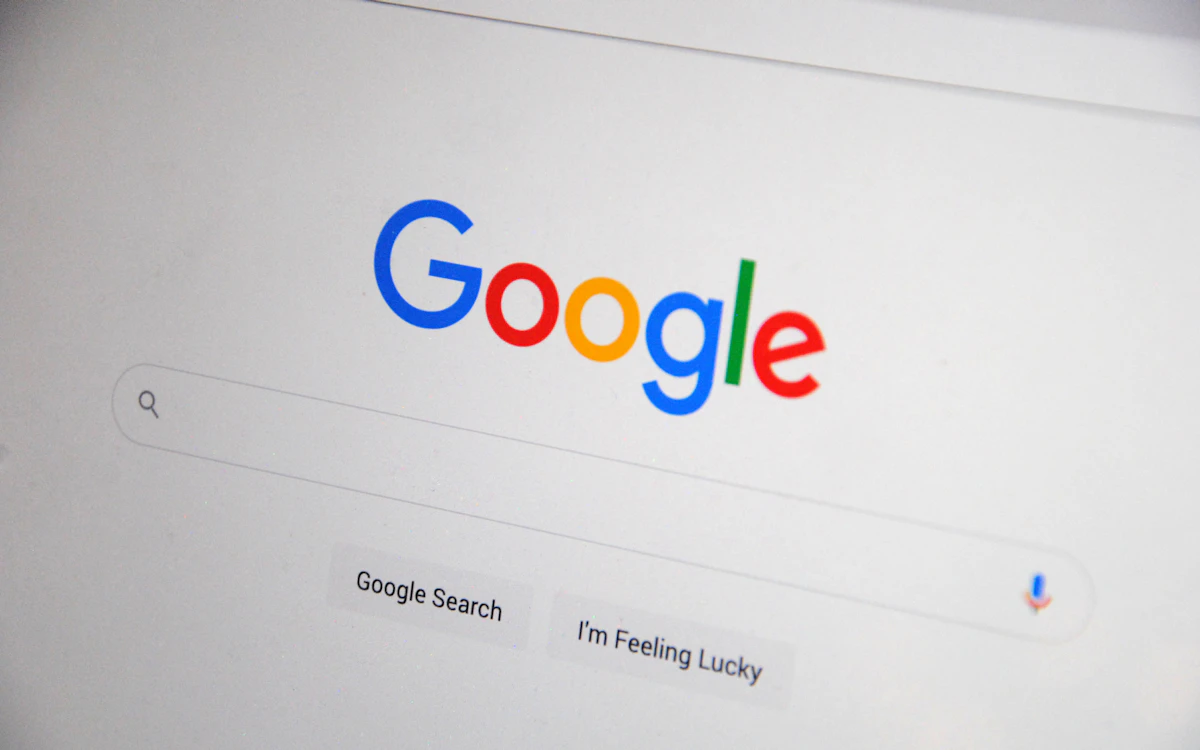
For the first time in 25 years, Google changed its search box. The new interface expands as the user types, reflecting how queries become longer and more conversational. AI Mode now operates with Gemini 3.5 Flash, and new information agents work in the background 24/7 to monitor updates on topics that matter to the user, crossing blogs, news sites, social media, and real-time data. Google also announced that Search will be able to build personalized dashboards and trackers for ongoing tasks. The search engine no longer wants to show results: it wants to solve complete tasks.
Universal Cart
Universal Cart is Google's most direct move towards conversational commerce. It is an AI-powered shopping cart that operates within Gemini, YouTube, and Gmail: it aggregates products from various retailers, compares prices, detects incompatibilities between items, displays price history, and leverages information about payment methods, loyalty programs, and merchants' offers stored in Google Wallet. It will arrive at Search and Gemini in the United States this summer, with YouTube and Gmail to follow. For the retail media and ecommerce ecosystem, this announcement has direct implications on how brands manage visibility at the point of purchase.
Ask YouTube
YouTube enters conversational territory with Ask YouTube, a feature that allows complex queries and follow-up questions within the platform, presenting the most relevant videos from the catalog with structured and interactive answers. Available for Premium subscribers in the United States. For the AdTech industry, this repositions YouTube as a direct competitor to TikTok Search and ChatGPT in the AI-based discovery space.
Gmail Live and AI Inbox
Gmail Live allows users to search and manage emails conversationally within the same application, available for AI Pro and Ultra subscribers in the United States this summer on Android and iOS. AI Inbox, a version with lower access, will be available to AI Plus and Pro subscribers. Both features transform email from a passive repository to an active workspace managed by AI.
Docs Live and Google Keep
Docs Live allows users to create and edit documents through natural language conversation, available on Android and iOS this summer for Pro and Ultra subscribers globally in English. Google Keep will receive a similar feature that organizes thoughts and free notes into structured and concise content, available on Android this summer for AI Pro and Ultra subscribers.
Android XR and smart glasses
Google introduced its first venture into smart eyewear alongside Samsung, Qualcomm, Gentle Monster, and Warby Parker. The glasses will arrive in the fall without a screen but with voice response capabilities, compatible with both Android and iPhone. The company positions them as a direct competitor to Meta's glasses, aiming for a scenario where conversational interfaces move from the phone to the user's body.
New consumption model in Google AI plans
Google is migrating from daily prompt limits to a usage-based computation model, where the complexity of the prompt, the features used, and the length of the conversation determine actual consumption. Limits are reset every five hours until the weekly limit is reached. Google AI Ultra increases to $100 per month with limits five times greater than AI Pro. The previous plan of $250 drops to $200 while maintaining the same capabilities.
Content authenticity: SynthID and C2PA
Google announced the expansion of SynthID and C2PA Content Credentials to Search, Gemini, Chrome, Pixel, and Cloud. SynthID has already marked over 100 billion images and videos, along with 60,000 years of audio, in response to growing concerns about the authenticity of AI-generated content. The integration of C2PA allows verification of whether content is original and unaltered or if it has been modified by AI tools.
From the perspective that next+ builds on the intersection of technology, advertising, and digital business, Google I/O 2026 is not a launch event: it is a statement of intent about what the internet will be like in the coming years. The combination of agents performing tasks, a search engine that resolves instead of linking, a cart that autonomously makes purchases, and models that generate video from any type of input redefines the rules for publishers, brands, agencies, and advertisers alike. For Latin America, the impact will be gradual but inevitable: brands that rely on Google Ads, organic SEO, and YouTube traffic will need to prepare for an environment where visibility no longer depends on appearing in results but on being understood, recommended, and executed by AI agents. The question is no longer whether to adapt, but at what speed.