
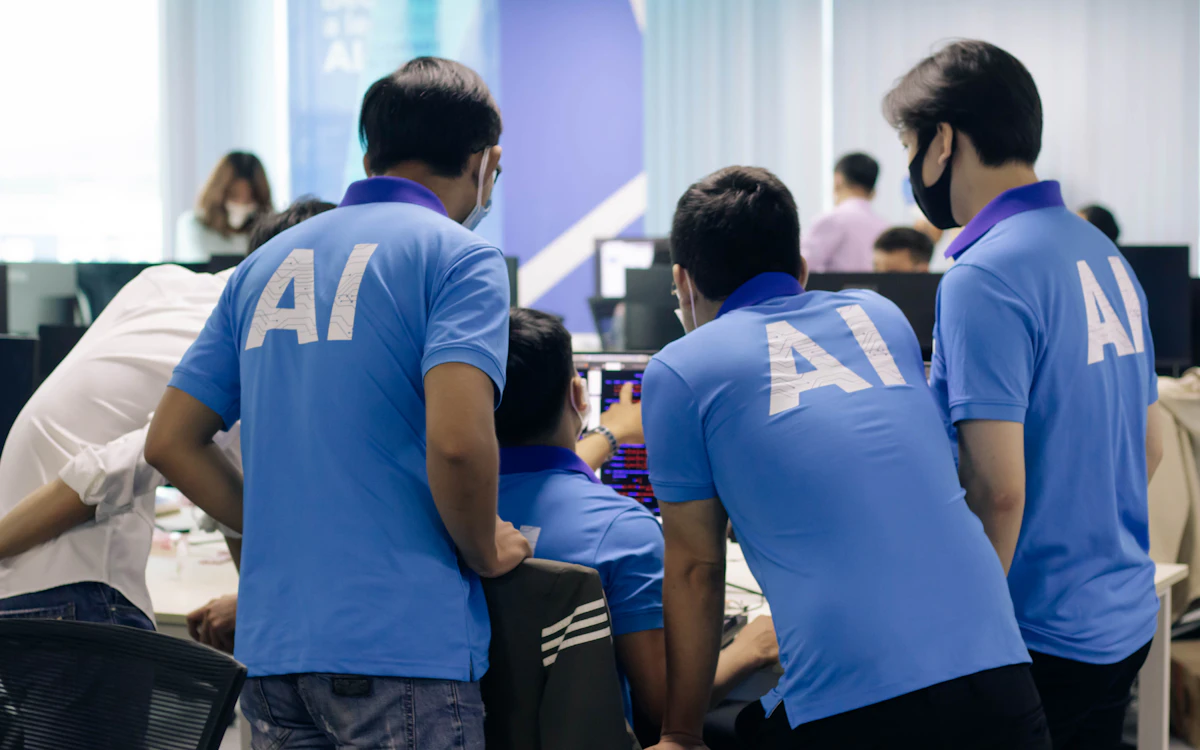
The Mexican labor market for entry-level profiles is facing a turning point. According to research by the Mexican Institute for Competitiveness (IMCO), the annual growth of job offers for inexperienced youth has halved in the last five years, going from a 9% increase in 2021 to just 3% in 2026.
The transformation of "Junior" positions
Although economic and sectoral factors influence this deceleration, the transformation of entry-level positions through the adoption of Artificial Intelligence (AI) emerges as a critical global trend. AI is altering employment structures, automating tasks that traditionally served as gateways to the professional world. This phenomenon not only complicates the immediate employability of young people but also poses a systemic risk for organizations in the long term: by eliminating the initial rungs, it limits the formation of experience, the transfer of knowledge, and the development of leadership that companies will need in the future.
Towards a skills-based hiring model
In this scenario, the labor market is transitioning towards two fundamental trends:
- Skills-based hiring: IMCO anticipates that the scarcity of skills will accelerate the adoption of this model, where specific capabilities are prioritized over traditional academic degrees, enabling talent diversification.
- Lifelong learning: It is estimated that by 2030, the 59% of global workers will require training. In Mexico, the World Economic Forum estimates that 54 out of every 100 workers will need to update their skills or retrain for different roles in the upcoming years.
The risk of global youth unemployment
The warning is not local; the International Labor Organization (ILO) estimates that, in an unfavorable scenario where AI displaces 10% of youth occupations, up to 5.6 million young people in the world could become unemployed.
The reduction of entry-level vacancies is a wake-up to C-Levels. What we observe is the need for companies to stop viewing AI merely as a tool for saving operational costs in basic tasks and start seeing it as a catalyst to create new opportunities for hands-on learning. The perspective of next+ is that the survival of the talent chain depends on the ability of organizations to strengthen capabilities that are difficult to automate in the new generations.