
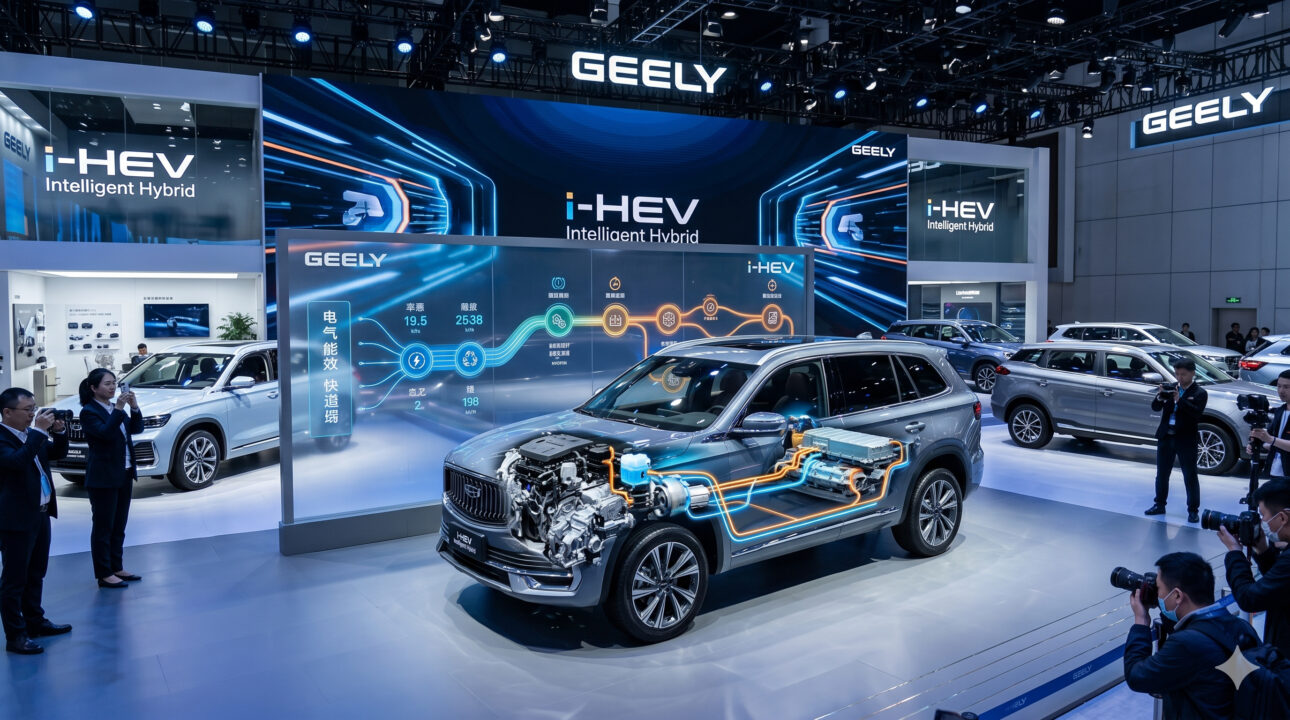
The Chinese automaker Geely has outlined its roadmap to challenge the historical leadership of Japanese manufacturers in Mexico. By the end of 2027, the company will introduce its first non-plug-in hybrid vehicles (HEV), leveraging a technical architecture that promises unprecedented thermal efficiencies in the national industry.
Geely's differentiating factor lies not only in electrification but in a shift in engineering logic. While traditional brands tend to add an electric motor to an existing combustion platform, Geely has opted for the reverse path: designing a native electric architecture to which a combustion engine is incorporated.
"I am not thinking about electrifying a combustion vehicle; I am thinking about combusting an electric vehicle,"
explained Ricardo Arvizu, Head of Product Strategy at Geely Auto Mexico. This methodology, developed under the alliance Horse Powertrain (comprising Geely, Renault, and Saudi Aramco), aims to achieve thermal efficiencies close to 50%, positioning itself at the upper limit of what current technology allows.
The assault on Toyota's stronghold
The business objective is clear: to compete in a market that reached 112,000 annual units in Mexico in 2025. Currently, Toyota dominates 42% of this segment, selling practically four out of every ten hybrids in the country. Geely identifies a critical opportunity among consumers looking for fuel efficiency but lacking the necessary infrastructure to install residential chargers.
Geely's competitive advantage is based on its capacity for partnership. Through Horse Powertrain, the firm combines decades of experience in combustion engines from Renault with the agility in electronics and batteries accumulated in China over recent years.
From the perspective of next+, Geely's move confirms that Mexico is the new battleground where Chinese technology seeks to bridge the trust gap against the Japanese legacy. What we are observing is a transition from technological dependency: Chinese manufacturers are no longer just competing on price or gadgets but on the efficiency of the vehicle's heart. For sector executives, the arrival of these models in 2027 will force a reevaluation of brand loyalty strategies in a market that is inexorably moving towards multitechnology.