
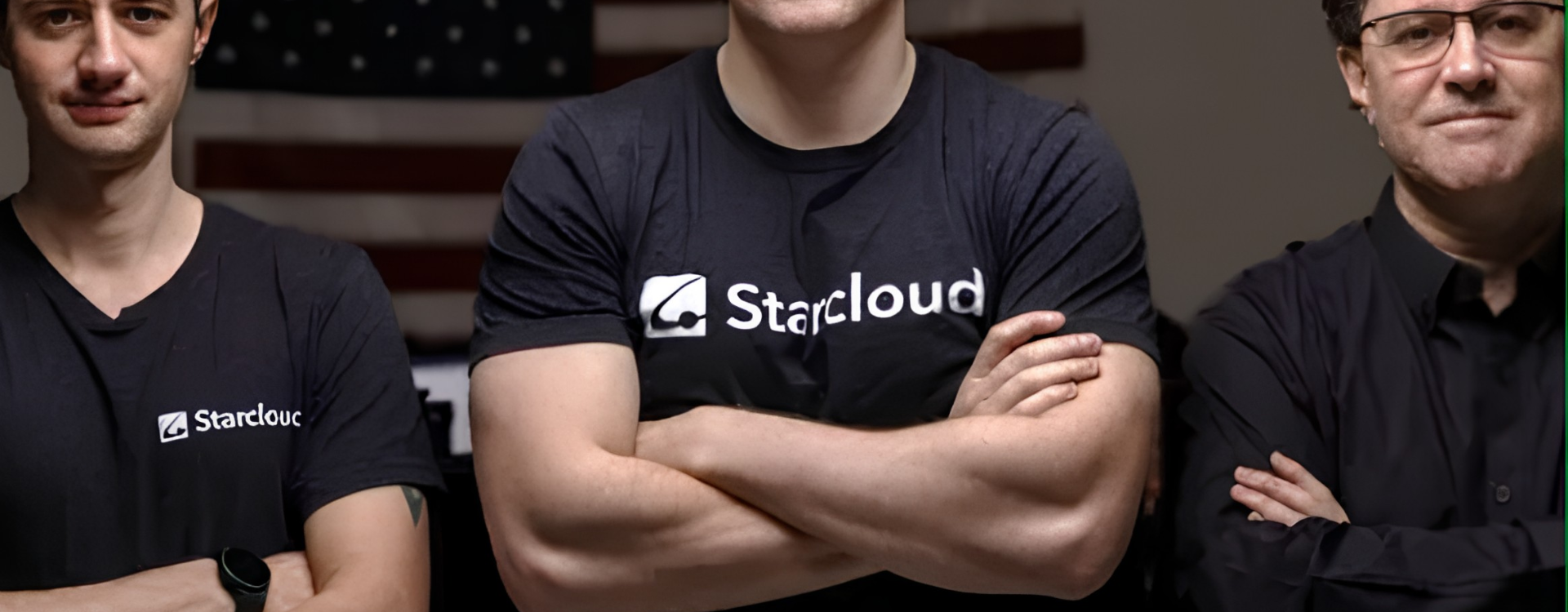
tarcloud, the startup that develops data centers in orbit, raised a round of 250 million dollars at a valuation of 2.3 billion dollars, with the participation of Nvidia and Cisco as new investors, TechCrunch reported on August 21.
The round, an extension of Series A that the company originally closed in March for 170 million dollars, was led by Manhattan West, with participation from previous investors such as Benchmark, EQT, Soma, and NFX, along with new backers like Cedar Capital, Goanna Capital, and Standard Capital. Nvidia contributed 25 million dollars to the round, while Cisco Investments joined for the first time as an investor, bringing expertise in networks, optics, and artificial intelligence infrastructure.
The funding brings the total capital raised by Starcloud to 450 million dollars since its founding in 2024, and will be allocated to expand its manufacturing capacity, hire additional rocket launches, and support joint engineering work with Nvidia.
The collaboration between both companies started when Starcloud sent the first Nvidia H100 GPU into orbit aboard its Starcloud-1 satellite in November 2025, and now they are working together on Nvidia's Vera Rubin space module, designed for extreme conditions where cooling relies mainly on large radiators, and components must withstand exposure to radiation.
The interest of chip and networking manufacturers in funding space infrastructure confirms that constant solar energy and passive cooling from space are seen as advantages over the energy and cooling limitations faced by terrestrial data centers, at a time when available launch options are already beginning to dwindle against sector demand.
For the artificial intelligence infrastructure industry, Starcloud's case confirms that the competition for computing capacity is already pushing investors toward options considered experimental just a couple of years ago, in the search for alternatives to the soil, water, and electricity restrictions that limit the expansion of conventional data centers.
From the perspective of next+, Nvidia and Cisco's bet on Starcloud confirms that orbital data centers are no longer a speculative idea and have become an infrastructure category that leading computing and artificial intelligence providers now consider part of their long-term strategy in light of the physical limits of terrestrial infrastructure.