
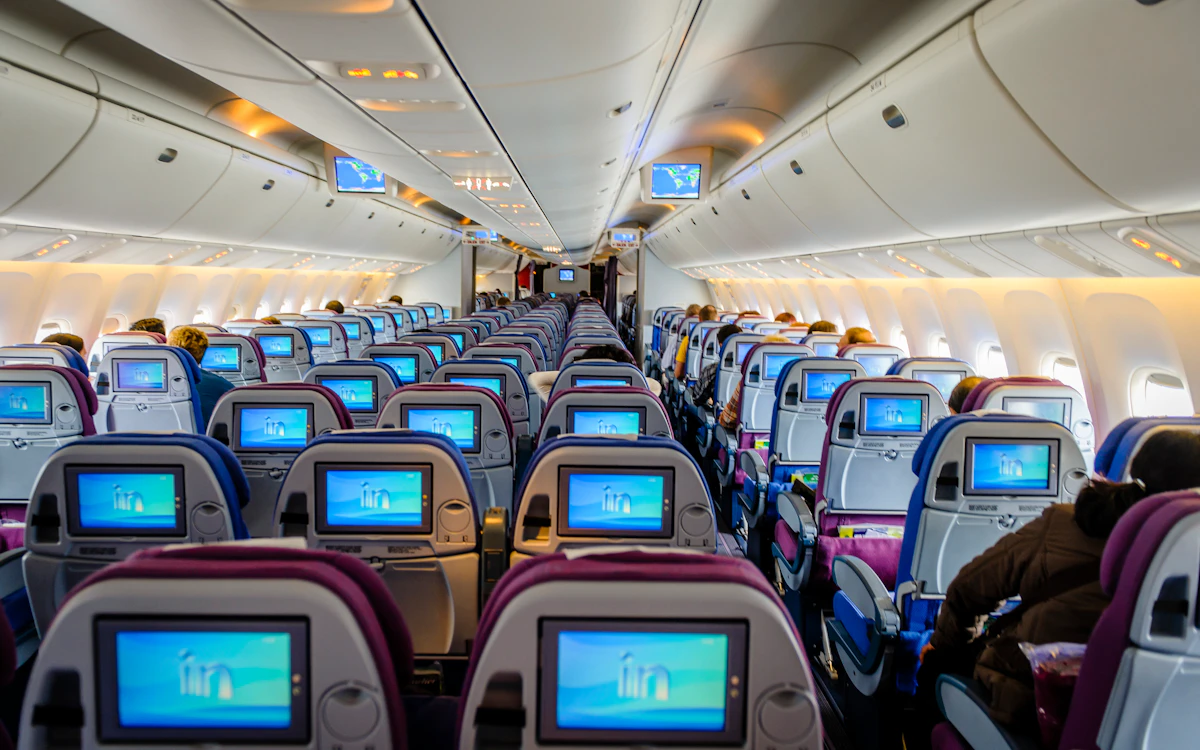
Volaris will incorporate Starlink, SpaceX's satellite network, across its entire fleet of Airbus A320 and A321 aircraft starting in 2027. The rollout will cover more than 150 aircraft and will make Volaris the first airline based in Mexico, Costa Rica, and El Salvador to offer satellite internet connectivity to its passengers during flight.
The agreement stipulates that Starlink will directly manage the onboard service, using its low Earth orbit (LEO) network, designed to offer high speed and low latency. Unlike traditional satellite systems that operate in higher orbits and generate greater connection delays, Starlink's LEO technology allows for a browsing experience closer to that of a terrestrial connection, with the capacity to support streaming, video calls, messaging, and productivity tools throughout the entire journey.
Enrique Beltranena, President and CEO of Volaris, summarized it in concrete terms: "Our customers will be able to use their streaming service, make video calls, listen to music, or work connected from takeoff to landing." The executive also noted that this incorporation demonstrates that the ultra-low-cost model can evolve at the pace of travelers' expectations.
Volaris's move is not isolated. It is part of a broader initiative promoted by Indigo Partners, an investment firm that groups low-cost airlines globally. Bill Franke, managing partner of Indigo Partners, confirmed that the program seeks to extend Starlink to its entire portfolio: Frontier Airlines in the United States, Wizz Air in Europe, JetSMART in South America, and Cebu Pacific in the Philippines. Together, the five airlines plan to install the system in more than 1,000 aircraft, one of the largest global initiatives to incorporate next-generation satellite connectivity in commercial aviation.
From next+'s perspective, the Volaris-Starlink alliance has a dimension that goes beyond passenger comfort. High-speed in-flight internet eliminates one of the last spaces where the user remains involuntarily disconnected, and that has direct implications for the digital ecosystem: more time using streaming platforms, more productive work sessions, more opportunities for digital commerce during the journey. For brands and platforms that work with audiences in transit, quality in-flight connectivity expands a window of attention that practically does not exist today. For Volaris in particular, the integration of Starlink is also a differentiating argument within the low-cost segment, where the onboard experience has historically been the area where these airlines sacrifice most to keep fares low. Offering real connectivity at scale changes that equation.