
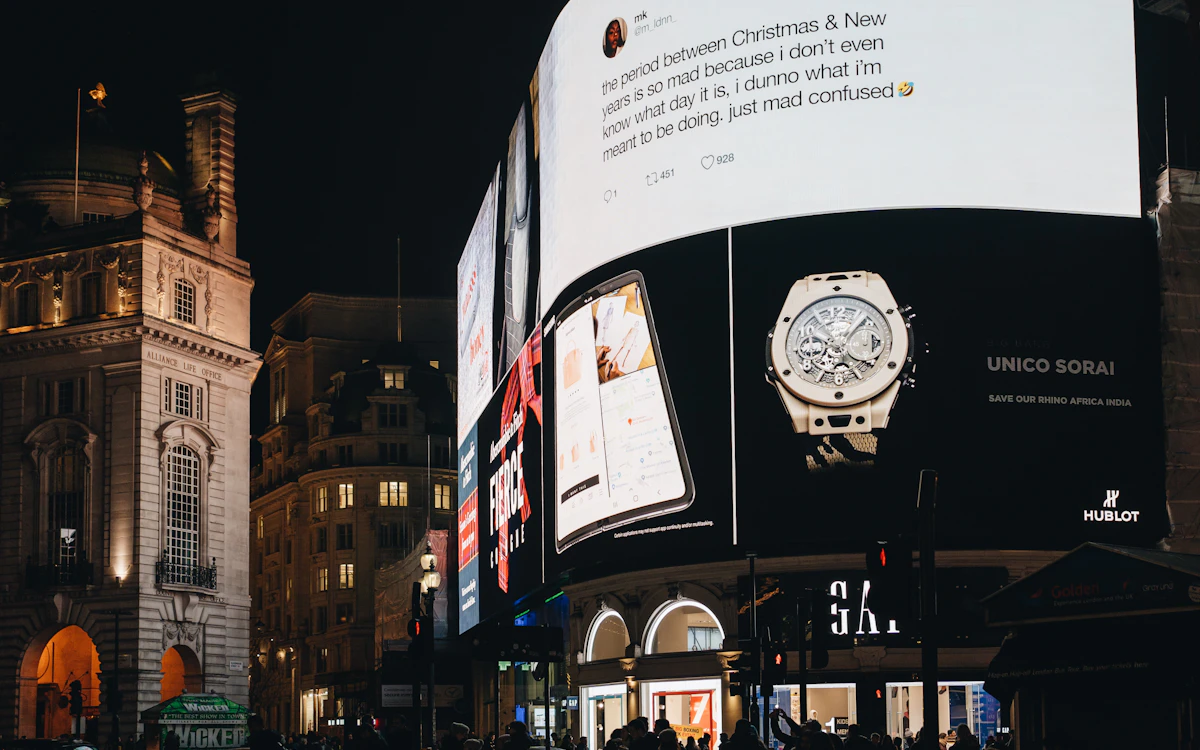
With an estimated global audience that could exceed 5 billion accumulated viewers, the FIFA World Cup 2026 is shaping up to be the most ambitious advertising platform of the decade. According to estimates from WARC, the tournament is expected to generate more than $10.5 billion in incremental advertising investment globally, impacting media such as television, digital platforms, streaming, and outdoor advertising. In this context, the OOH format emerges as one of the most relevant channels for brands looking to impact audiences on the move, especially in Latin America, where urban mobility and exposure in public spaces continue to rise.
What is OOH and why does it matter now
The OOH format, short for Out of Home, encompasses all advertising that impacts the consumer outside of their home: billboards, transport, urban furniture, digital screens, and high-exposure structures in physical environments. Its structural strength lies in the fact that it does not rely on active media consumption: the brand does not wait for the user to seek it out but instead integrates directly into their daily journey. Globally, the OOH market has surpassed $23.2 billion and, according to current projections, could reach approximately $25.8 billion by the end of 2026, according to data from Fortune Business Insights and Dentsu.
OOH in Mexico: from static impacts to dynamic environments
In Mexico, the format has evolved towards high-impact proposals that transform public space into platforms for mass communication. Recent activations in the Paseo de la Reforma corridor, in the vicinity of the Angel of Independence for Sam's Club, and an intervention with large-scale urban totems with LED lighting at Perisur, are examples of how brands are leveraging urban space to generate conversation that transcends the physical touchpoint and amplifies on social media.
Investment in Digital Out of Home in Mexico reached $138 million and, with an annual compound growth rate of 8.82%, it is projected to exceed $211 million by 2030, according to estimates from Statista. This growth is not just a migration of budget from traditional media: it reflects a shift in advertising logic, from static impacts to dynamic, measurable, and real-time adaptable environments.
Towards DOOH and Programmatic OOH
The next phase of the sector combines physical presence with digital logic: DOOH and POOH, or Programmatic Out of Home, allow brands to plan, buy, and optimize outdoor spaces with the same precision that they operate in digital media. In a global environment where audiences are in constant motion and conversation occurs simultaneously on the street and digital platforms, that ability to adapt in real-time becomes a concrete competitive advantage.
From the perspective with which next+ follows the evolution of the advertising ecosystem, the 2026 World Cup is not only a visibility opportunity for brands, but also a stress test for their media strategies. Campaigns that combine high-impact physical presence with measurable digital amplification will be those that generate the highest return in an environment where consumer attention is contested across multiple layers simultaneously. For marketing teams and agencies planning activations around the tournament, OOH is no longer merely a supporting medium: in many cases, it is the starting point of the conversation.