
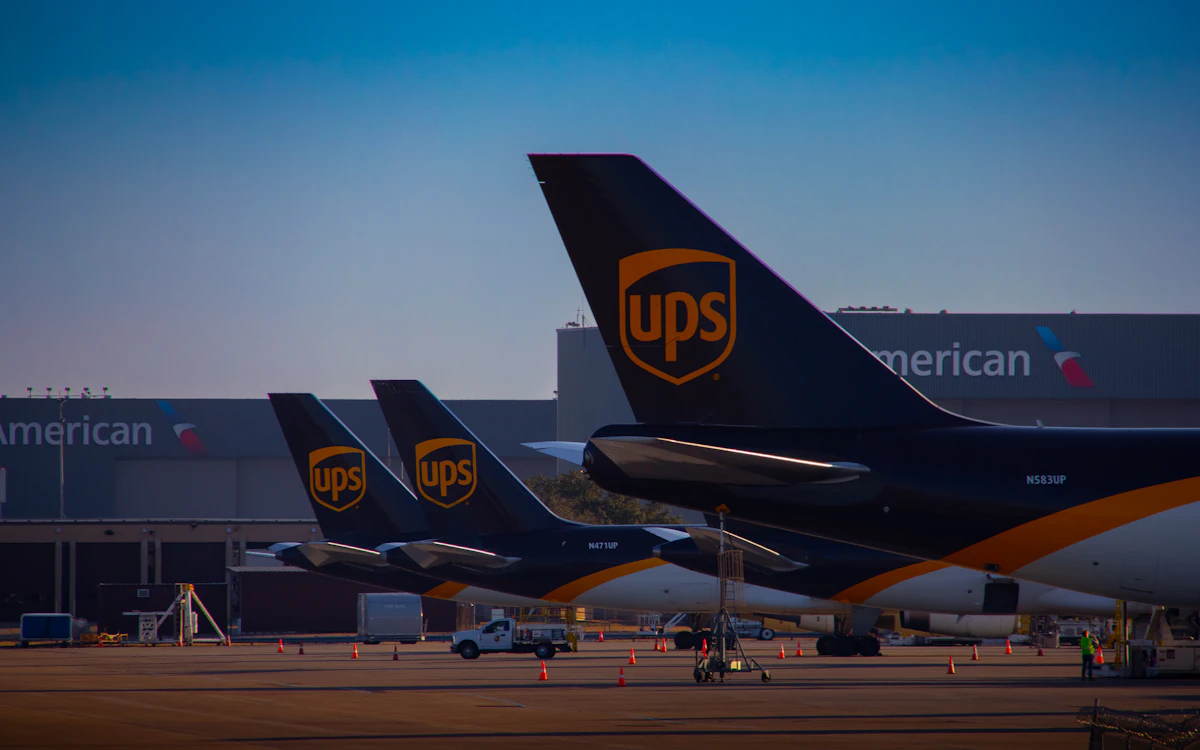
UPS announced the expansion of UPS North American Air Freight in Mexico, an integrated logistics platform that combines air, ground, and customs services under a single network operated by the company to connect Mexico with the United States and Canada. This initiative is part of a global investment of 50 million dollars aimed at strengthening the company’s logistics capabilities in the region.
The move directly responds to the growth of nearshoring and the role that Mexico has consolidated as a manufacturing hub in North America. According to UPS, the manufacturing industry represented 19.6% of the national GDP in 2024, positioning itself as the leading productive sector in the country. This dynamism has increased the demand for logistics solutions capable of moving with greater speed, reliability, and efficiency among the main industrial corridors in the region.
UPS NAAF offers defined transit times of one to three days between the three countries that make up the USMCA, with service levels configurable according to the operational needs of each customer. The solution is targeted at industries where reliability is critical: automotive, aerospace, medical devices, and high-tech manufacturing. The company highlighted that the service records damage claim rates lower than 0.1%, below the industry average, which is a relevant figure for sectors handling high-value or time-sensitive components.
The integration of transportation, storage, and customs processes into a single platform seeks to reduce the operational complexity for manufacturers, improve shipment visibility, and strengthen supply chain resilience against disruptions. Diana Sánchez, Director of Freight Forwarding & Global Logistics & Distribution at UPS Latin America, stated that Mexico's strategic position within North American supply chains necessitates comprehensive solutions to meet the new requirements of the industry.
From the perspective of next+, UPS's expansion in Mexico is yet another sign that logistics infrastructure is being pressured by a nearshoring trend that is growing faster than the installed capacity to move it. Industries relocating their manufacturing to Mexico not only need land, labor, and energy: they need a supply chain that operates with the precision and speed required by synchronized production schemes. Whoever controls the logistics of that chain will have a structural advantage in a market where delivery times and reliability are as critical as production costs.